

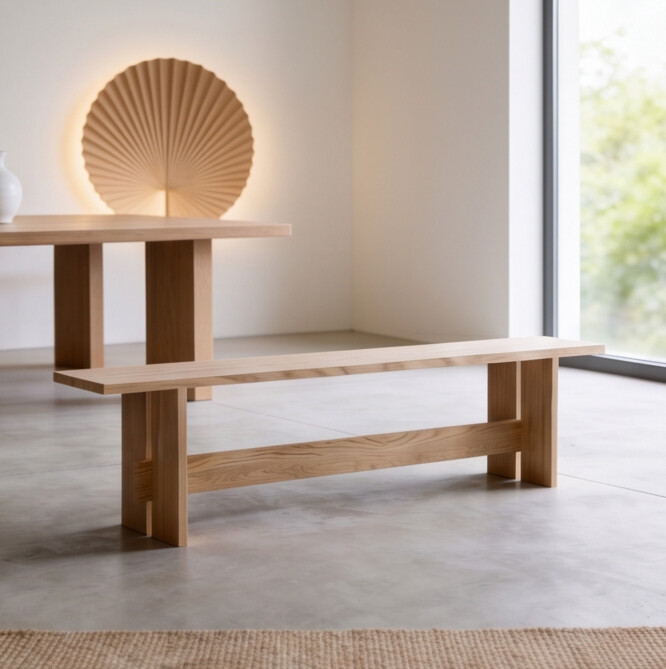
A bench is furniture's Swiss Army knife — and most people only ever open one blade. Shove it in a hallway and it's a place to sit while you fight with your laces. Put it at the end of a bed and it quietly swallows the duvet nobody wants to fold. Pull it up to a dining table and it seats two more people than a row of chairs ever could. One solid oak bench, three completely different jobs — and it'll outlast whatever trend convinced you to buy it.
If you're shopping for a solid oak bench UK-made and built to actually hold weight (not just look nice in a photo), here's how to pick the right one for where it's actually going to live.
Hallway Duty: Sit, Lace Up, Go
The hallway is where a bench does its hardest work. It needs to survive wet coats, muddy boots, and being sat on at speed by someone already running late. That's exactly the job our American Oak Bench was built for — solid American oak, hard wax oil finish, and a seat height that sits comfortably at boot-lacing level rather than perching you awkwardly like a kitchen stool.

Depth matters more than people expect here. A 24cm-deep bench tucks neatly against a narrow wall without eating into the walkway; a 29cm option gives you a proper perch if anyone's actually going to sit and tie shoes rather than balance a bag on it for two seconds. Have a browse of the full hallway collection if you're kitting out the whole entryway at once — a bench next to matching shelving looks intentional rather than like separate purchases.
Bedroom Duty: The Bench That Actually Stores Something
End-of-bed benches get bought for the look and then quietly become the most useful thing in the room. Ours — the Solid Oak End of Bed Storage — is a lift-lid storage bench, so it's doing double duty as seating and as somewhere to put the spare duvet, off-season clothes, or the growing pile of cushions nobody has a plan for.

The sizing rule of thumb: measure your bed's width and aim for a bench that's roughly two-thirds to three-quarters of it. Go full-width and it looks like you ran out of ideas; go too narrow and it reads as an afterthought. Most people underestimate how much a well-sized bench does for a bedroom — it's the piece that makes the room look "finished" rather than just furnished. Check the bedroom collection for sizes that'll match a standard double, king, or super king.
Getting the Size (and the Wood) Right
A few things worth knowing before you order, whichever job your bench is doing:
- Seat height ~45cm matches most dining chairs and standard bed heights, so it won't look mismatched sitting next to either.
- Solid oak moves slightly with the seasons — expect tiny gaps to open and close with humidity. That's the wood being real wood, not a fault.
- Hard wax oil finish means scuffs buff out with a bit of fresh oil rather than needing the whole piece refinished, which matters a lot on something that gets sat on daily.
- Measure the gap, not just the bench — leave at least 45cm of walking space in front of any hallway bench, or it becomes an obstacle course instead of a seat.
The Bit Most People Skip: Matching the Rest of the Room
A bench rarely lives alone. In a hallway it usually sits under a coat rack or beside a console; in a bedroom it's often at the foot of a frame with matching bedside tables. Solid oak and solid walnut pieces age well together because the hard wax oil finish is consistent across the range — so a natural oak bench won't fight with a slightly different oak shelf next to it the way mismatched veneers sometimes do.
Buy it for one job if you want, but don't be surprised when it ends up doing three.


