

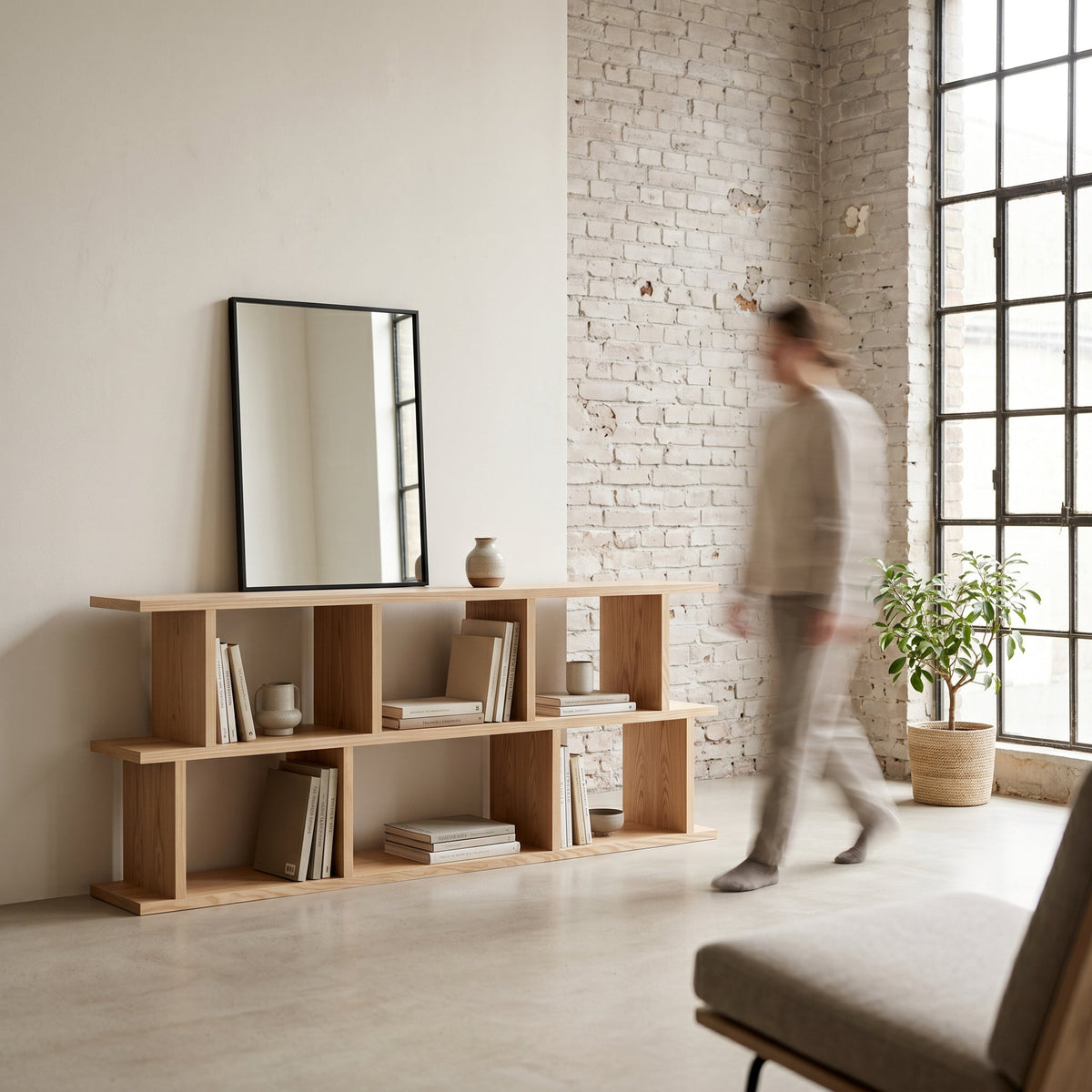
Nobody dreams of a home office. But everyone who's lost a Tuesday hunting for a missing invoice, a stray charger, or "that book I definitely still own" dreams of one that actually works. A solid oak bookcase is the fastest way to get there — and it looks nothing like the flat-pack unit it's replacing.
Why a Bookcase Beats Another Set of Shelves
Floating shelves are lovely until you run out of wall. A bookcase gives you vertical storage without eating your whole office wall in brackets, and — because it's freestanding — you can move it the moment the room stops working for you. That flexibility matters more than people think: a home office rarely stays a home office. This year it's a desk, next year it might be a guest room with a fold-out bed shoved in the corner.
Our Japandi Oak Bookcase is built for exactly that in-between life. Clean lines, no fuss, and enough shelf space to swallow box files, reference books and the odd plant that's migrated in from the kitchen windowsill.

The One Measurement Everyone Gets Wrong
Here's the bit nobody tells you before you buy a bookcase: paperbacks are shallow, but the things that actually clutter a home office — A4 box files, ring binders, printer paper reams — need real depth. A box file alone is around 30cm deep. Plenty of "slim line" shelving on the market maxes out at 20–22cm, which means your files hang halfway off the edge forever.
Check the depth before you check the style. Solid oak holds its shape under that kind of load far better than veneered chipboard, which can bow over time once you stack it with anything heavier than a novel — one more reason solid wood earns its keep in a working room, not just a living room.
Oak for Light, Walnut for Weight
If your office gets good natural light, American oak keeps the room feeling open — it's pale, warm, and doesn't compete with everything else on the shelf. If you want the bookcase to read as a statement piece — the kind of thing that makes a video call background actually interesting — go black walnut. Our Bodhi Solid Black Walnut Bookcase is the deeper, moodier option, freestanding and finished the same way as everything else we make: hard wax oil, not varnish, so the grain stays visible and any scuffs can be spot-repaired rather than requiring a full refinish.

Making It Feel Like a Room, Not a Storage Unit
A bookcase full of matching box files is efficient but soul-crushing to look at all day. A few quick fixes:
- Break it up by height, not just colour. Stack some books flat, stand others upright, leave one shelf half-empty for a plant or a lamp.
- Keep the bottom shelf heavy, the top shelf light. It's more stable in practice and it tricks the eye into thinking the whole piece is bigger than it is.
- Add a side table nearby for the things you touch daily — coffee cup, notebook, headphones — so the bookcase itself stays a display piece rather than a dumping ground. Our American Oak Side Table does the job neatly next to a reading chair or desk corner.
- Leave a gap. One entirely empty shelf, even just 20cm of it, is what separates "styled" from "storage."
Want to see the full range before you pick a finish? Browse the whole Bookcases collection for sizing and pricing side by side.
Whichever you choose, it's built to order in the UK and it'll outlast the job you're currently using the office for — which, honestly, is the whole point of buying solid wood in the first place.


